Understanding Scoliosis
What is Scoliosis?
Scoliosis is a medical condition characterized by an abnormal lateral curvature of the spine. It can occur at any age but is most commonly diagnosed during adolescence. Understanding scoliosis is crucial as it can impact physical health, posture, and overall quality of life. Early detection and treatment are key to managing its effects and preventing further complications.
Types of Scoliosis
Idiopathic Scoliosis
Idiopathic scoliosis is the most common form, accounting for approximately 80% of cases. Its exact cause is unknown, but it typically develops during the growth spurts of adolescence.
Neuromuscular Scoliosis
Neuromuscular scoliosis arises due to conditions that affect the nerves and muscles, such as cerebral palsy or muscular dystrophy, leading to an imbalance in spinal support.
Degenerative Scoliosis
Degenerative scoliosis occurs in adults due to the degeneration of spinal discs and joints, often associated with aging, leading to a gradual curvature of the spine.
Congenital Scoliosis
Congenital scoliosis is present at birth and results from malformations of the spine during fetal development, necessitating early monitoring and intervention.
Mild Scoliosis
Mild scoliosis is characterized by a spinal curve of less than 20 degrees. It often requires regular observation to monitor any progression.
Moderate Scoliosis
Moderate scoliosis involves a spinal curve between 20 and 40 degrees. Treatment may include bracing to prevent further curvature.
Severe Scoliosis
Severe scoliosis is defined by a curve greater than 40 degrees, which can lead to significant health issues and may require surgical intervention.
Adult Scoliosis
Adult scoliosis presents unique challenges, including pain management and maintaining mobility. Understanding its progression is essential for effective treatment.
Common Questions About Scoliosis
What is scoliosis?
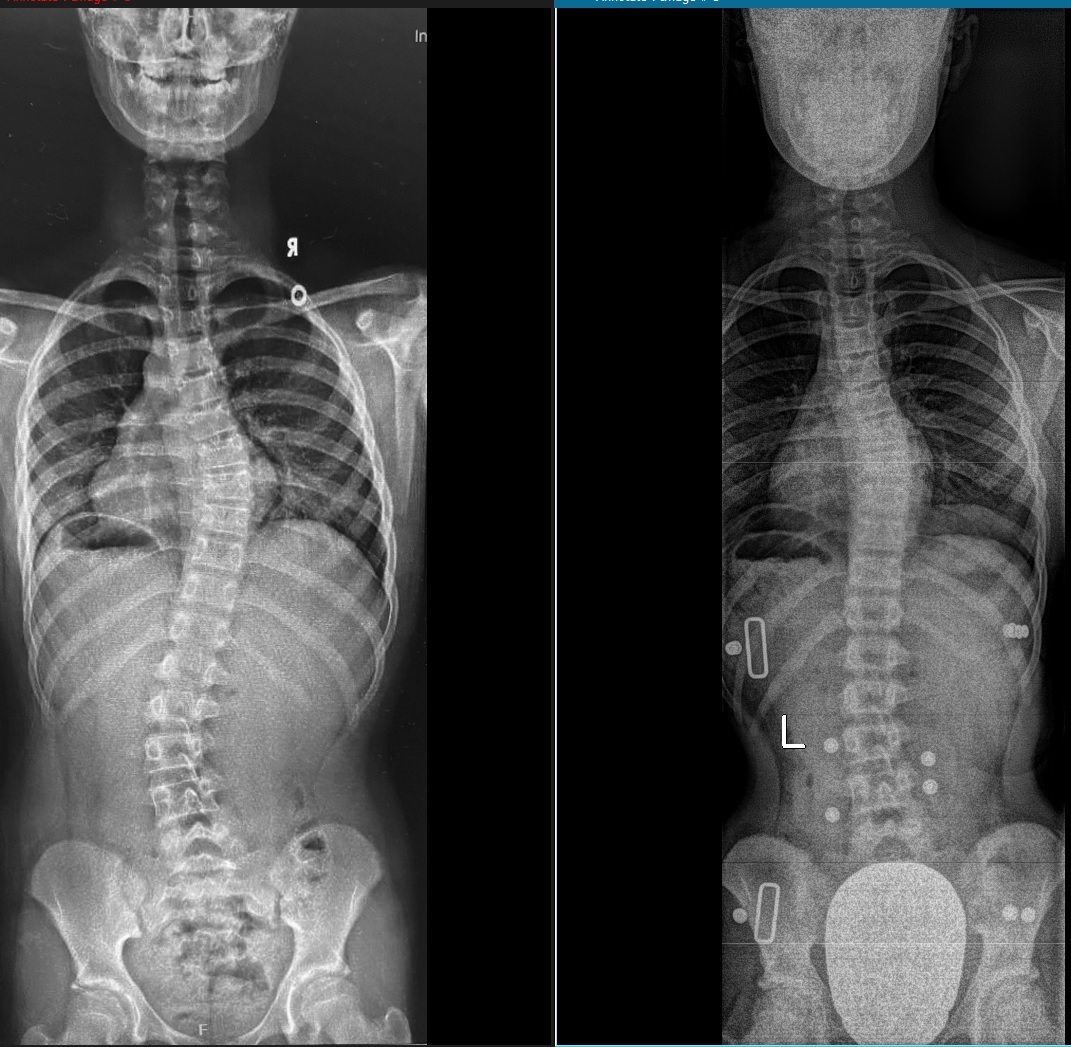
Scoliosis is a spinal condition where the spine curves sideways, forming an S or C shape.
What causes scoliosis?
Most cases of scoliosis are idiopathic, meaning the cause is unknown, but it is thought to be a combination of genetic and environmental factors. In some cases, scoliosis can be caused by neuromuscular conditions, congenital spinal abnormalities, or injuries. While it is most common in adolescents, it can also develop in adulthood due to degenerative changes in the spine.
Who gets scoliosis?
Anyone can get scoliosis, but it is more prevalent in girls than boys. It usually starts in growing children during puberty. If there is a family history of scoliosis, it is important to screen your child regularly. Early detection can help in managing the condition before it progresses to a more severe stage.
How do you diagnose scoliosis?
Scoliosis is diagnosed through a physical examination and confirmed with x-rays. The severity of the curve is measured in degrees using the Cobb angle, which helps determine the appropriate treatment approach.
Can people with scoliosis live normal lives?
Absolutely! Most people with scoliosis can live normal, active lives. However, they are advised to follow a customized scoliosis-specific exercise program to help manage their condition effectively. With the right treatment and lifestyle adjustments, individuals with scoliosis can prevent further progression and maintain good spinal health.
Can scoliosis be treated?
Scoliosis can be treated effectively with a custom brace along with a scoliosis-specific exercise program. The earlier the treatment, the better the outcome. Smaller curves are easier to treat than larger curves. However, in severe cases that do not respond to conservative treatment, surgery may be an option, and sometimes it is the best course of action for preventing long-term complications.
Once you are finished growing, does scoliosis continue to get worse?
Yes! Once you have finished growing, the progression is not as rapid as during growth, but your curves will continue to progress over time. That is why it is imperative that all scoliosis patients follow a scoliosis program, to learn how to manage their scoliosis for life. Factors such as aging, poor posture, and lack of physical activity can contribute to worsening curvature and associated discomfort.
What is the Total Scoliosis Solution (TSS) Program?
Total Scoliosis Solution (TSS) is a complete scoliosis program. At Scolidoc Centers, we implement all the leading conservative scoliosis treatment methods such as Schroth Method (Germany), SEAS Method (Italy), Clear Method (US), Lyon Method (France), Dobomed (Poland), and others. The TSS Program is continuously updated with the latest research and advancements in scoliosis care to ensure that our patients receive the most effective and up-to-date treatment available.
Book Your Free Consultation
Whether you feel prepared to embark on scoliosis treatment or if you have additional inquiries, we encourage you to reach out and connect with our dedicated team.